I wrote a hex viewer, then used it to look at itself
This is one of the smallest projects on the site and one of the most directly connected to what I want to understand. I wrote a hex viewer in C from scratch. It reads a binary file sixteen bytes at a time and prints an offset, the bytes in hexadecimal, and their printable ASCII representation.
The program is around fifty lines long. That size is useful: I can hold the whole thing in my head, compile it, inspect its output and then work through what the compiler produced. There is very little unrelated application machinery to get in the way.
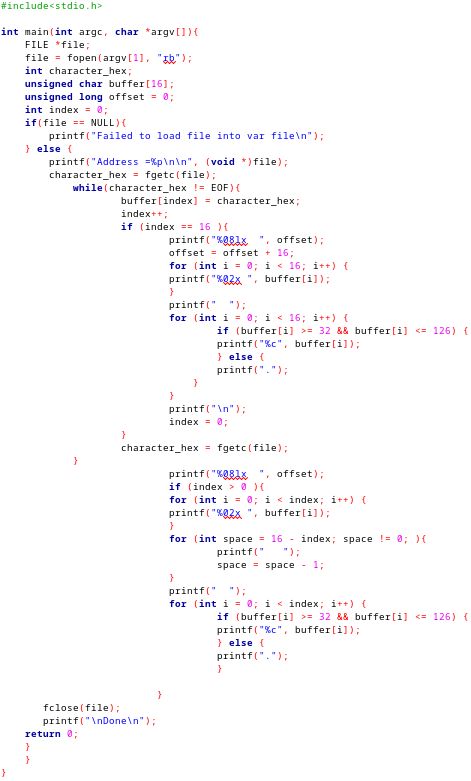
Three ways of looking at the same bytes
A binary file is difficult to inspect as ordinary text. A hex view puts structure around the bytes without pretending that the whole file is text. The offset tells me where I am in the file. The hexadecimal column gives a consistent representation of each byte. The ASCII column makes readable strings stand out when they happen to be present.
The implementation gave me a small, concrete reason to work with a file handle, a fixed-size byte buffer, a running offset and formatted output. The last line also needs attention: a file will not necessarily end on an exact multiple of sixteen bytes. The output still needs to make sense when the final group is shorter.
Then I compiled the program and pointed it at its own executable. That is the bit of hex-ception I mentioned in the original post. The tool can display the file that contains the tool. It makes the transition from source text to an executable much less abstract.
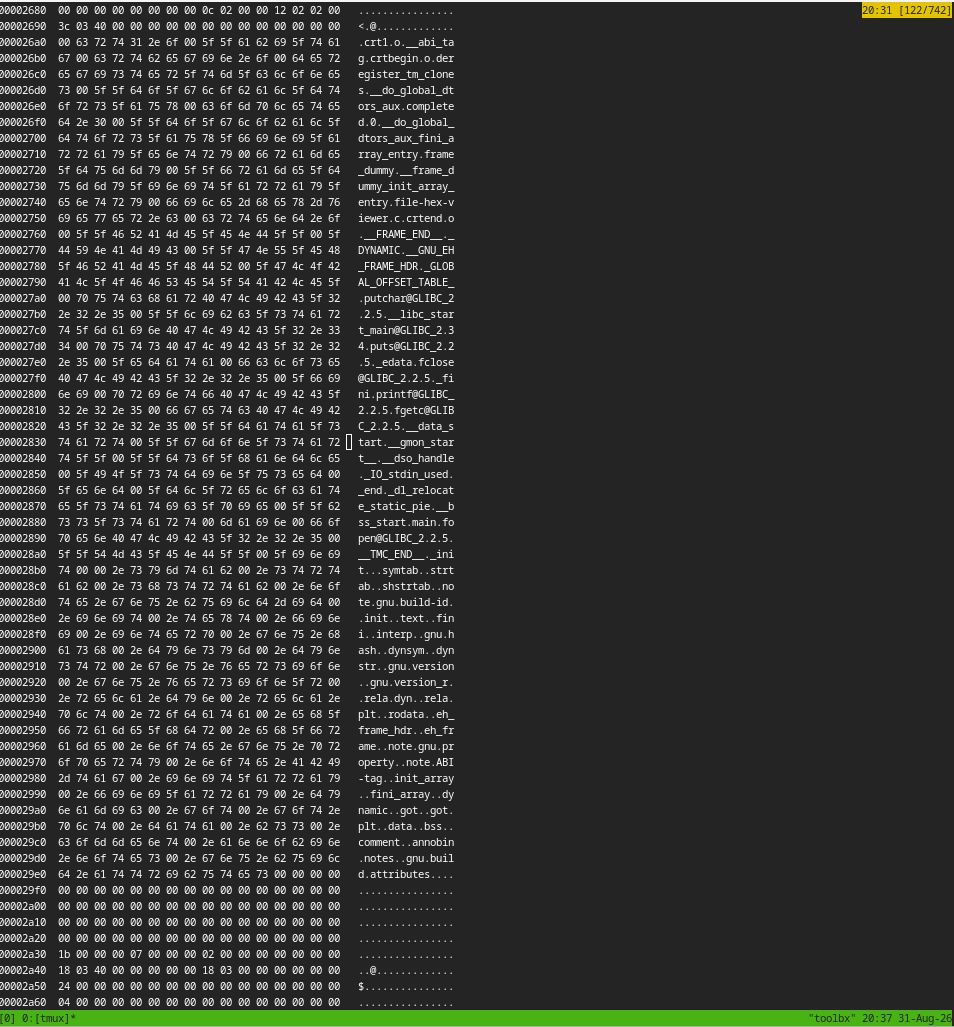
The next step was IDA
Looking at hexadecimal bytes is one view. Disassembly gives another. I opened the compiled program in IDA and started connecting the C source to the x86-64 instructions. Argument handling, stack setup, branches and function calls become things I can point to in the executable.
In the screenshot below, the call to fopen is visible alongside IDA's decompiled representation. The source-level operation of opening a file becomes a sequence that sets up the arguments and calls the imported function. Further down are the checks and loops that control reading and printing.
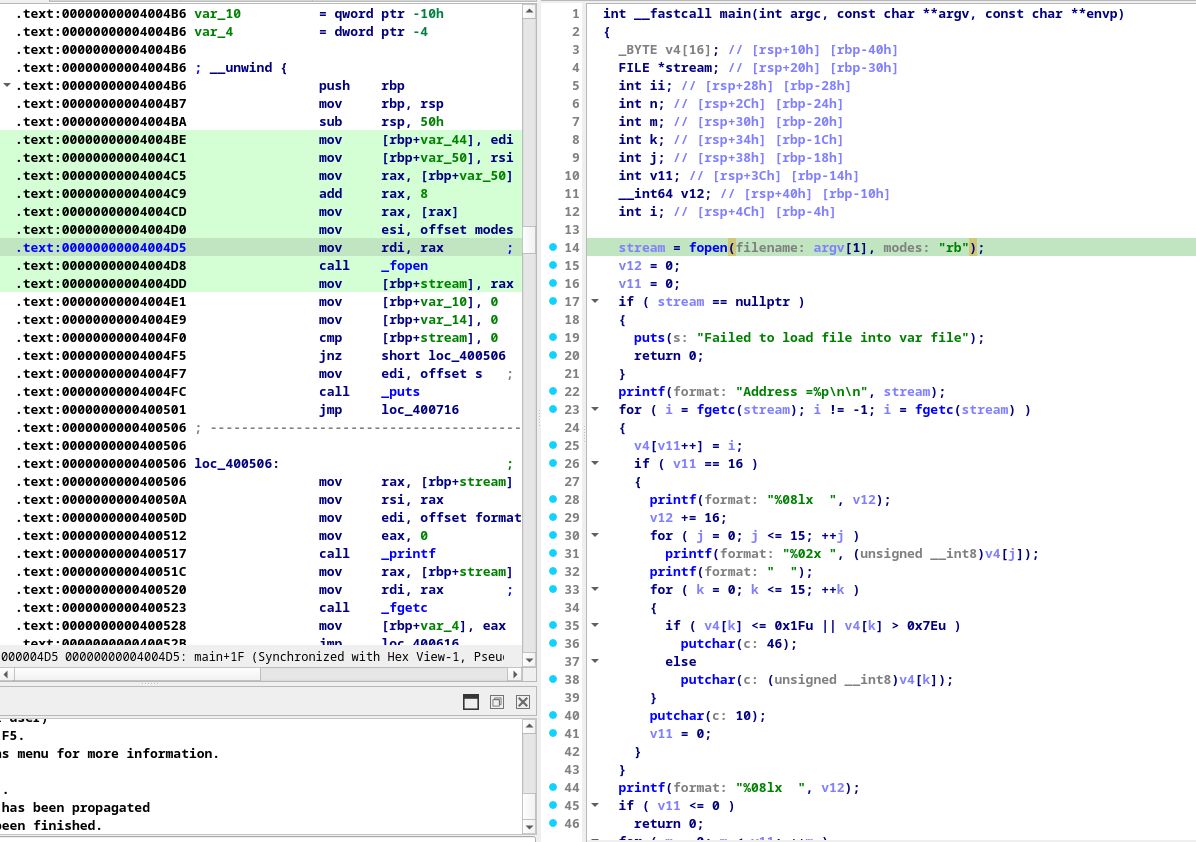
Writing the program first gives me a reference point. I know what I intended it to do, so I can compare that intention with the control flow and instructions in front of me. The decompiler is another interpretation to examine, not a guarantee that the original source has been recovered.
This is part of my ongoing study of C, Linux, operating-system internals, reverse engineering and malware analysis. There is a lot further to go. The attraction of a small program like this is that each step can be inspected closely enough to turn a vague idea into something I actually understand.
Original LinkedIn post. The three images above are the original images from that post.